Muhammad Suhail Khan

Muhammad Suhail Khan

Department of Sociology, School of Sociology and Political Science, Anhui University, No: 111 Jiulong Road, Jingkai District, 230601, Hefei, China.

About

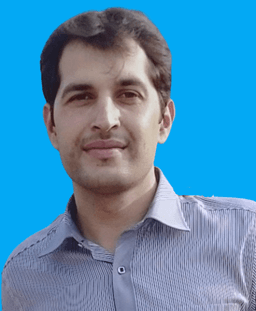
Dr. Muhammad Suhail Khan is a dedicated Ph.D. research scholar in sociology at Anhui University, China, and a migration observer at the University of Gdansk, Poland. His research is driven by a profound commitment to addressing structural inequalities in gender, education, and migration, with a focus on Khyber Pakhtunkhwa, Pakistan. Methodologically, he integrates empathetic, on-the-ground qualitative work with a focus on generating actionable knowledge for policy advocacy, ensuring that his scholarship is both academically rigorous and socially transformative.

A robust portfolio of publications in reputable journals, including significant contributions as a first or corresponding author, demonstrates Dr. Khan's scholarship. He actively engages with academic communities through presentations at international conferences and editorial work, including serving as guest editor for the interdisciplinary journal Sage Open. Deepening his service to the global research community, he has contributed his expertise as a peer reviewer for several distinguished journals, including SAGE Open, Asian Education and Development Studies, Cambridge Prisms: Global Mental Health, Violence Against Women, BMC Health Services Research, and the International Journal of Child Care and Education Policy. In this capacity, he helps uphold scholarly rigor and guides the necessary research toward publication.

His specific research critically examines gender under systemic constraints: he analyzes how patriarchal norms restrict girls' education in Pakistan, investigates socio-economic factors in women's substance abuse, and studies the challenges Afghan refugee women face in accessing rights and services—work designed to inform more equitable policies. He demonstrates methodological versatility by employing in-depth qualitative techniques alongside quantitative survey analysis. His long-term goals include deepening the understanding of how patriarchy and economic deprivation impact women's agency, mental health, and opportunities, ultimately seeking to translate his findings into policies that promote gender equity and improve public health and educational access for marginalized groups in South Asia.

The unifying thread throughout Dr. Khan's work is a committed, ethical scholarship that seeks not only to document inequality but also to inform its remedy. By centering the voices of marginalized communities and coupling findings with policy engagement, his work transcends traditional academic boundaries, leveraging sociological insights for tangible social betterment.

Identifiers:
Web of Science ResearcherIDKDO-8013-2024
Scopus ID: 59193991800
ORCID: https://orcid.org/0000-0001-8440-5440
ResearchGate: https://www.researchgate.net/profile/Muhammad-Suhail-Khan?ev=hdr_xprf
Academia: https://ahu.academia.edu/MuhammadSuhailKhan
University of Gdansk, Poland: https://czrug.ug.edu.pl/programy/obserwatorium-migracji/muhammad-suhail-khan/
Emails: sohail.khattak1@yahoo.com / mskhansocio@stu.ahu.edu.cn
Publications

Patriarchal Bargains and Intergenerational Negotiations: An Exploration of Family Decision-Making for Girls' Education in Khyber Pakhtunkhwa, Pakistan

Published by

Education as Change

Summary

This study focuses on the effect of economic constraints and patriarchal norms on the educational choices of rural girls in Khyber Pakhtunkhwa, Pakistan. Using the theoretical framework of patriarchal relations developed by Deniz Kandiyoti, we examined the strategies employed by mothers, grandmothers, and young women against the backdrop of low educational levels and rigid gender relations. The study involved in-depth interviews and field-based observations with 40 participants, including fathers, mothers, grandparents, and young women. Thematic assessments were incorporated into the data validation protocols. Empirical data reveal that poverty, family pressures, and gender-constructed traditions impede women’s educational opportunities. The findings indicate that because of poverty, family, and gender stereotypes, there is low access to education among women. However, with the support of social and economic approaches, high-school girls will be able to challenge patriarchal practices. Therefore, empowering women and girls in families will eventually transform the customary traditions that forbid both education and educational opportunities for the next generations.

Socio-economic and psychological factors contributing to drug use among females in Khyber Pakhtunkhwa, Pakistan: A mixed-methods approach

Published by

South African Journal of Psychiatry

Summary

Background: Women in Khyber Pakhtunkhwa face several barriers, including poverty, cultural stigma, intense social pressure and a lack of accessible services, which prevent them from addressing drug use and mental health issues. Aim: The study aimed to explore the impact of socio-economic and psychological factors on substance use among women aged 25–34. Setting: This study was conducted at community centres and private schools across several cities in Khyber Pakhtunkhwa, Pakistan, including Peshawar, Charsadda, Nowshera, Swabi and Mardan. Methods: A mixed-methods approach was employed, combining quantitative surveys from 120 participants to analyse drug use patterns and qualitative interviews with 20 participants to investigate personal and social challenges through in-depth interviews. Results: Quantitative data indicated that unemployment, financial hardship and low education significantly predicted drug use, whereas moderate depression, anxiety and stress exacerbated it. Perceived stigma serves as a protective role in this study. Qualitative findings highlight themes such as socioeconomic challenges, mental health issues, cultural pressures and barriers to treatment that exacerbate these problems. Conclusion: This study highlights the importance of rehabilitation centres and community counselling services tailored to women’s specific needs, along with legislative measures to address gaps in support and resources for women facing drug use issues. Contribution: This study contributes to the understanding of the complex relationships between mental health, socioeconomic status and cultural factors influencing drug use among women and aims to inform public health policy and strategy.

Drug use among young women in Pakistan: A qualitative study of socioeconomic and psychological perspectives

Summary

Drug use among young women has severe consequences for their mental health, increases their developmental vulnerability, and highlights the global problem of drug addiction. The purpose of this study was to investigate the socioeconomic and psychological factors influencing drug use among young women in Khyber Pakhtunkhwa, Pakistan. The study used a qualitative research design. We collected data from 12 women aged 18–21 years via in-depth qualitative interviews conducted in Mardan and Peshawar from March to June 2022. Research shows that young women frequently use drugs due to peer pressure, emotional challenges, and financial concerns, which significantly impact their lives. The study emphasizes the value of cultural intervention programs for young women, concentrating on the region’s mental health services, economic empowerment and gender-specific peer support networks.

A descriptive study on the relationship between entrepreneurial attitude and self-efficacy among university students in Pakistan

Published by

African Journal of Reproductive Health

Summary

The study investigates the relationship between entrepreneurial attitudes and self-efficacy among Pakistani students at the University of Peshawar, Pakistan. Using quantitative methods, n = 250 students were surveyed. Data were collected through questionnaires and analyzed using SPSS version 20.0. This study used the Pearson correlation test to examine the relationship between variables, with special attention to the Entrepreneurial Attitude Scale and the Multidimensional Leadership Self-Efficacy Scale. Data were collected from the respondents through purposive sampling. The results indicate that there is a significant positive correlation between entrepreneurial attitude and self-efficacy, and behavioral, cognitive, and emotional factors have a substantial impact on entrepreneurial attitude and self-efficacy. The study highlights that cultivating a positive entrepreneurial mindset among students can increase their self-efficacy, which is critical for entrepreneurial success. It recommends that universities build strong entrepreneurship education programs that include practical experiences such as internships, business simulations, and mentoring. This approach improves students' entrepreneurial skills and their chances of starting successful businesses

Gender, culture, and migration: A qualitative study of the socioeconomic challenges facing Afghan women refugees in Khyber Pakhtunkhwa, Pakistan

Published by

African Journal of Reproductive Health

Summary

journal-article

A review of tourist behavior at religious sites in Khyber Pakhtunkhwa, Pakistan

Published by

Przegląd Religioznawczy – The Religious Studies Review

Summary

conference-paper

The Role of ED-Links (Educational Development) in the Promotion of Secondary Education (A Case Study of District Malakand, Tehsil Dargai)

Published by

European Journal of Sociology

Summary

journal-article

THE IMPACT OF MOBILE BANKING APPLICATION ON CLIENT INTERACTION WITH YEMEN BANKS

Published by

International Journal of Business Strategies

Summary

journal-article

The Mediating Role of Cultural Distance in China Africa Trade Relationship

Published by

International Journal of Humanities and Social Science. Vol. 11, No. 5; May 2021.

Summary

journal-article

FAMILIAL CONFLICT RESOLUTION: CURRENT CHALLENGES AND FUTURE PERSPECTIVE

Published by

PAKISTAN JOURNAL OF SOCIETY, EDUCATION AND LANGUAGE

Summary

journal-article

Education

Anhui University
China

Ph.D. / Sociology

Anhui University
Hefei, Anhui, China

Master / Sociology

University of Malakand
Malakand, Khyber Pakhtunkhwa, Pakistan

Master / Sociology

Abdul Wali Khan University Mardan
Mardan, Khyber Pakhtunkhwa, Pakistan

Bachelor of Arts